




Introduction
Hidden among the vibrant streets of Marrakech, the Gnawa Museum stands as a sanctuary of rhythm, memory, and faith. It celebrates the spiritual brotherhood of the Gnawa, whose hypnotic music bridges African roots and Moroccan soul. Visitors enter a space where ancestral beats echo through time — where each note carries history, healing, and devotion.
The Origins of Gnawa
The story of Gnawa music begins in Sub-Saharan Africa, carried north through centuries of migration and the painful legacy of slavery. Over time, these rhythms merged with Sufi mysticism and Berber traditions, giving birth to a sacred art form that is both musical and therapeutic.
Gnawa masters — or Maâlems — became revered not only as musicians but as spiritual healers and storytellers, passing down chants, instruments, and rituals from generation to generation.
Inside the Gnawa Museum
The Gnawa Museum in Marrakech offers an immersive introduction to this living heritage. Inside, you’ll find:
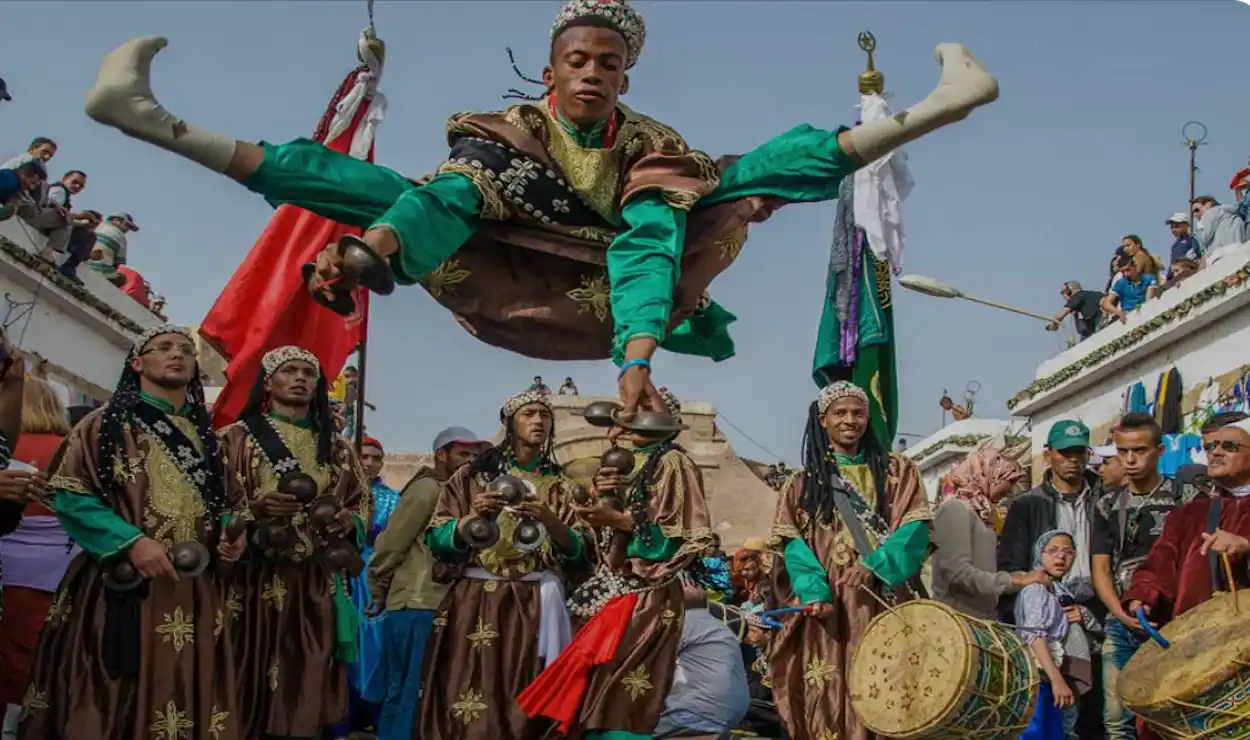
- 🎵 Traditional instruments such as the guembri (three-string bass lute), krakebs (metal castanets), and tbel (drum).
- 🕊️ Ceremonial costumes and artifacts used in trance rituals and spiritual gatherings.
- 📸 Historic photos and audiovisual archives honoring legendary Maâlems and their influence on Moroccan music.
- 🔊 Interactive sound installations that let you feel the pulse of Gnawa through rhythm and vibration.
Spiritual and Healing Dimensions
At the heart of Gnawa practice are Lila ceremonies — all-night rituals of music, incense, and dance intended to restore balance between body and spirit. These gatherings invite participants into a trance state that releases pain and welcomes peace.
The museum’s exhibits and audio recordings beautifully convey how music becomes medicine, and rhythm a language of healing.
UNESCO Recognition
In 2019, UNESCO inscribed Gnawa culture on its list of Intangible Cultural Heritage of Humanity, acknowledging its role in preserving Morocco’s collective identity. The museum stands as a guardian of this recognition — a bridge connecting generations of artists, healers, and seekers.
Why Visit the Gnawa Museum
- To trace the African and Sufi roots of Moroccan music.
- To witness authentic instruments and rituals rarely seen elsewhere.
- To experience the transformative power of rhythm and spirituality.
- To go beyond mainstream tourism and connect with Morocco’s soulful traditions.
Conclusion
A visit to the Gnawa Museum is more than a cultural stop — it’s a spiritual encounter. Between the hum of the guembri and the metallic beat of the krakebs, travelers feel the essence of Morocco’s ancestral rhythm.
Whether you are a music lover, a cultural explorer, or a seeker of deeper meaning, this museum opens a doorway into the sacred heart of Morocco’s sound.

Gnawa music is not just sound—it is healing, memory, and spirit
Maâlem Hamid El Kasri

0 Comments